The best resistance bands for running mobility make it easier to activate key muscles, improve movement control, and add low-impact strengthening before or after a run. A good set should offer useful resistance levels without taking up space in your gym bag.
We compared 10 popular band sets across materials, resistance ranges, portability, comfort, and exercise versatility. The right choice depends on whether you need compact loops for hips and glutes, longer bands for dynamic mobility, or a durable system for broader strength training.
Best 10 Resistance Bands for Running Mobility Picks for 2026
Versatile Loop Set

- Five resistance levels for gradual progression
- Useful for stretching, strength, and rehab
- Includes carry bag and illustrated guide
Best For: Portable all-around running mobility routines
Stay-Put Fabric Loops

- Non-rolling design for lower-body work
- Five levels from light to extra heavy
- Compact loops target hips, legs, and glutes
Best For: Pre-run lower-body activation and hip mobility
Latex-Free Flexbands
Renoj Pilates Resistance Bands

- Soft, odorless, latex-free TPE material
- Five levels with combinable resistance
- 60-inch bands support full-body mobility
Best For: Latex-free stretching and low-impact mobility
Silicone Progression Set

- Five levels span 5 to 125 pounds
- Anti-snap, non-slip silicone construction
- Includes carry bag and user manual
Best For: Full-body mobility plus progressive strength training
Best Adjustable Set

- Five resistance levels for progressive training
- Natural latex with up to 115 lb combined tension
- Carry bag and 150+ exercise options
Best For: Adjustable mobility, stretching, and strength routines
Best for Lower-Body Stability

- Three resistance levels for activation and progression
- Textured fabric helps prevent rolling or sliding
- Wide loops target legs, hips, and glutes
Best For: Lower-body activation and hip stability drills
Best Portable Variety

- Five levels from extra light to extra heavy
- Carry bag and manual support on-the-go use
- Works for mobility, yoga, Pilates, and strength
Best For: Travel-friendly full-body mobility and conditioning
Versatile Mobility Pick

- 100% natural rubber construction
- Supports stretching and rehabilitation
- Compact, medium-tension design
Best For: Runners needing one multipurpose mobility and strength band
Stretching and Rehab Choice
Medium Pull-Up Resistance Band
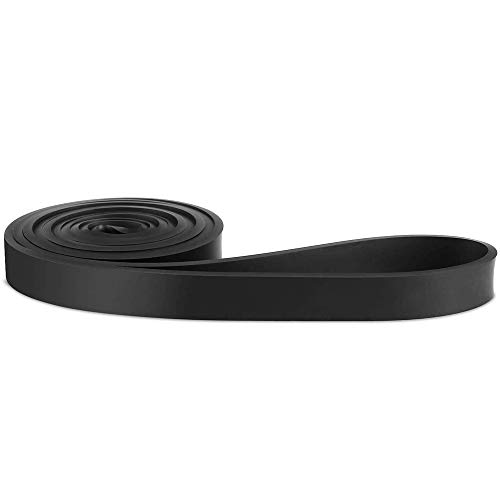
- 25–65-pound medium resistance
- Designed for stretching and rehabilitation
- Lightweight for travel and transport
Best For: Runners combining mobility work with moderate strengthening
Premium Recovery Option

- Light 5–15-pound resistance
- Full-length range of motion
- Includes TRX app trial access
Best For: Runners seeking light mobility, stretching, and recovery support
Versatile Loop Set – Fit Simplify Resistance Bands
Fit Simplify Resistance Loop Exercise Bands with Instruction Guide and Carry Bag, Set of 5
Check Price On AmazonFor runners looking to add mobility work, warmups, or light strength training, the Fit Simplify set offers five loop bands with progressively heavier resistance. Its compact carry bag and included exercise guide make it practical for home sessions, travel, and pre- or post-run routines.
Best For: Runners who want a versatile, portable set for mobility, stretching, rehabilitation, and progressive resistance work.
Pros:
- Five color-coded resistance levels support gradual progression.
- Useful for stretching, strength training, and physical therapy exercises.
- Includes an illustrated instruction guide and carry bag.
Cons:
- Latex material may not suit users seeking a latex-free option.
- The loop format may be less versatile than long bands for certain stretches.
This is a well-rounded choice for resistance bands for running mobility when you want multiple difficulty levels and clear exercise guidance in a lightweight package.
Stay-Put Fabric Loops – Fabric Resistance Bands
These fabric resistance bands are designed for lower-body activation, making them useful before a run or during hip and glute mobility work. The woven polyester-latex blend is described as non-rolling and non-slip, while five levels provide options from lighter warmups to more demanding exercises.
Best For: Runners prioritizing hip, glute, and leg activation with bands intended to stay in place above the knees.
Pros:
- Wide fabric loops are designed to resist rolling and pinching.
- Five levels range from light to extra heavy.
- Compact 12-by-2-inch design fits easily in a gym bag or travel kit.
- Rated for uses including warmups, rehabilitation, and leg workouts.
Cons:
- Primarily suited to lower-body exercises rather than full-body mobility work.
- The polyester-latex blend is not latex-free.
For resistance bands for running mobility focused on the hips and legs, this set offers a stable fabric design and a broad resistance range without much bulk.
Latex-Free Flexbands – Renoj Pilates Resistance Bands
Renoj’s long flexbands are a good fit for runners who want gentle, adjustable resistance during mobility sessions. The latex-free TPE material and five clearly marked levels support stretching, Pilates, physical therapy, and low-impact strength work for the hips, legs, shoulders, and core.
Best For: Runners seeking long, latex-free bands for full-body mobility, stretching, and joint-friendly resistance training.
Pros:
- Latex-free, odorless TPE construction is soft to the touch.
- Five levels range from 5 to 30 pounds and can be combined up to 80 pounds.
- Long 60-inch bands support varied stretching and full-body exercises.
- Lightweight and compact for office, park, gym, or travel use.
Cons:
- No carry bag or exercise guide is listed among the included components.
- Long bands may require more space to manage than compact loops.
This set stands out for resistance bands for running mobility when a latex-free material, long length, and low-impact progression matter more than a loop-only design.
Silicone Progression Set – Dapofajo Resistance Bands
Dapofajo’s silicone bands offer five calibrated resistance levels spanning 5 to 125 pounds, giving runners room to progress from lighter mobility drills to more demanding strength exercises. The anti-snap, non-slip design and included carry bag also suit warmups, travel workouts, and rehabilitation routines.
Best For: Runners who want a durable-feeling, full-body band set with a wide resistance range and portable storage.
Pros:
- Five levels cover a broad 5-to-125-pound range.
- Silicone construction is described as anti-snap, odor-free, and non-slip.
- Supports mobility, speed training, strength work, yoga, and rehabilitation.
- Includes a carry bag and user manual.
Cons:
- The broad resistance range may be more than needed for simple mobility routines.
- The notes do not specify band dimensions or individual band lengths.
Among resistance bands for running mobility, this set is appealing if you want to combine warmup and mobility work with a more extensive long-term strength progression.
Best Adjustable Set – TechStone 5-Level Loop Bands
For runners seeking resistance bands for running mobility, the TechStone set offers five resistance levels in a lightweight loop-band format. Its natural-latex construction and broad exercise range make it practical for warm-ups, stretching, strength work, and mobility sessions at home, outdoors, or in the gym.
Best For: Runners who want adjustable resistance for mobility drills, lower-body strengthening, stretching, and full-body cross-training.
Pros:
- Five resistance levels, with combined tension reaching up to 115 pounds.
- Natural latex provides consistent elasticity for repeated workouts.
- Compact design includes a carry bag for portable training.
- Supports more than 150 exercises, including stretching, rehabilitation, and pull-up assistance.
Cons:
- The set uses natural latex, so it may not suit people avoiding latex materials.
- It does not include handles or ankle cuffs, according to the supplied details.
This is the most versatile option of the three for runners who want to adjust resistance as their mobility and strength routine changes. The five levels also make it easier to share or progress through workouts.
Best for Lower-Body Stability – Fabric Leg and Glute Bands
These fabric resistance bands are a focused choice for runners using resistance bands for running mobility, especially during hip, glute, and leg activation work. Their textured inner surface and wide three-inch design are intended to stay in place during movements such as squats and lunges.
Best For: Runners who prioritize glute activation, hip stability, leg warm-ups, and lower-body strengthening without bands rolling up.
Pros:
- Three resistance levels support warm-ups through heavier activation work.
- Textured fabric interior helps reduce sliding and rolling.
- Three-inch width sits flat on skin or leggings.
- Compact loops require no setup and fit in a gym bag or backpack.
Cons:
- The set is designed primarily for legs and glutes rather than full-body band exercises.
- Care requires spot-cleaning and air-drying; machine washing and drying are not recommended.
- The supplied guidance limits maximum stretch to under twice the resting length.
Choose this set when keeping a band securely positioned matters more than having a wide range of exercise formats. It is particularly suited to pre-run activation and targeted lower-body work.
Best Portable Variety – 5-Level Exercise Band Kit
For runners who want resistance bands for running mobility in a travel-friendly kit, this five-piece set combines light-to-heavy resistance with a portable carry bag. The bands can support stretching, Pilates, yoga, physical therapy, and exercises for the legs, hips, ankles, arms, and upper body.
Best For: Runners who want a lightweight, multi-level kit for office stretches, travel workouts, mobility practice, and general strength training.
Pros:
- Five resistance levels range from extra light to extra heavy.
- Natural rubber bands are designed to maintain consistent tension.
- Portable set includes five bands, a manual, and a carry bag.
- Suitable for stretching, rehabilitation, Pilates, yoga, and full-body exercises.
Cons:
- The product details describe a mixed kit of flat and mini loop bands, so the exact format may vary by exercise.
- Natural rubber may not be appropriate for users avoiding rubber materials.
- No specific maximum combined tension is provided in the supplied details.
This kit stands out for portability and range rather than a single specialized use. It is a sensible pick for runners who want one compact set for mobility work, travel, and supplementary strength sessions.
Versatile Mobility Pick – Natural Latex Pull-Up Band
If you want resistance bands for running mobility that can also support strength work and recovery, this natural-rubber pull-up band is a flexible option. Its 82-inch length suits stretching, warm-ups, physical therapy, and full-body resistance exercises, while the compact design makes it practical for taking outdoors.
Best For: Runners and general fitness users who want one medium-tension band for mobility, stretching, rehabilitation, and strength training.
Pros:
- Made from 100% natural rubber with stated long-term elasticity.
- Useful for warm-ups, stretching, yoga, Pilates, physical therapy, and muscle training.
- Compact and lightweight at 4.16 ounces for travel or outdoor workouts.
- Non-slip design and an included instruction manual add practical convenience.
Cons:
- Only one resistance level and a medium-tension specification are provided.
- The single-band package may be less versatile than a multi-band set.
This is a sensible all-around choice when running mobility is only part of your routine. The long, narrow band can help with dynamic preparation and post-run stretching, while also supporting assisted bodyweight exercises.
Stretching and Rehab Choice – Medium Pull-Up Resistance Band
This medium resistance band is designed for stretching, rehabilitation, speed training, and general fitness, making it a practical candidate for resistance bands for running mobility. Its 25–65-pound resistance range can add pressure to stretches and provide progressive resistance for exercises at home, in the gym, or while traveling.
Best For: Runners who want a travel-friendly band for mobility work, retraining muscles, rehabilitation, and moderate resistance exercises.
Pros:
- Provides a stated 25–65-pound medium resistance range.
- Suitable for stretching, rehabilitation, speed training, aerobics, and progressive resistance work.
- Made from 100% latex for claimed durability and elasticity.
- Lightweight and compact for travel or transport.
Cons:
- The medium resistance may not suit users seeking very light mobility work.
- No additional components are included.
- Latex construction may be unsuitable for people who avoid latex products.
Compared with a basic stretch-only band, this model offers a broader resistance range for users who want to combine running preparation with strengthening. Its portability is especially useful for maintaining mobility routines away from home.
Premium Recovery Option – TRX Long Strength Band
The TRX Long Strength Band offers light, full-body resistance for runners who prioritize controlled mobility and recovery work. Its full-length design allows a broad range of motion, and the 5–15-pound resistance is intended to add manageable tension during training, stretching, and rehabilitation.
Best For: Runners who prefer lighter resistance for mobility, post-run stretching, recovery, and guided training at home or in the gym.
Pros:
- Light 5–15-pound resistance supports controlled mobility and recovery work.
- Full-length design allows a full range of motion for whole-body exercises.
- Suitable for workouts, post-workout stretching, rehabilitation, and prehab.
- Includes access to a trial of the TRX Training Club app with 500+ on-demand workouts.
Cons:
- Only one light resistance level is included.
- It may provide less challenge for users seeking heavy strengthening or pull-up assistance.
- The listed band is sold as a single unit.
This is the most recovery-focused option of the three. Its lighter tension and full-body length make it well suited to gentle running mobility sessions, while the included app trial can provide additional structure for training and rehabilitation.
How We Picked the Best Resistance Bands for Running Mobility
We focused on the features that matter most to runners: resistance variety, comfortable handling, portability, and suitability for activation, mobility drills, stretching, and supporting strength work. Sets with multiple levels scored well because they can accommodate different exercises and progression over time.
We also considered construction. Latex bands generally offer a responsive stretch and broad exercise range, while latex-free silicone or fabric options may suit shoppers who prefer a different feel or need an alternative material. Carry bags, instruction guides, and clearly identified resistance levels add practical value.
Quick Comparison
| Band type | Best for | Main advantage |
|---|---|---|
| Short loop bands | Hip, glute, and leg activation | Compact and easy to position |
| Fabric loop bands | Lower-body mobility and strength | Comfortable, stable feel |
| Long resistance bands | Dynamic stretching and full-body drills | More reach and exercise variety |
| Pull-up assistance bands | Mobility plus upper-body training | Higher resistance and longer length |
Key Buying Factors for Resistance Bands for Running Mobility
Resistance Range
Look for several resistance levels so you can use lighter tension for warm-ups and mobility, then heavier tension for controlled strengthening. A band should challenge you without forcing compensating movements or restricting your range of motion.
Band Length and Style
Mini loops work well for lateral steps, glute activation, clamshells, and hip-control exercises. Longer bands are more versatile for shoulder mobility, assisted stretching, rows, presses, and full-body movements. If you want one kit for running and general training, a set combining several levels of long bands may be the better choice.
Material and Comfort
Fabric bands can feel less slippery around the thighs, while latex bands typically provide smooth, progressive tension. Check the product dimensions and material details, especially if you have sensitivities or need bands that remain comfortable during repeated drills.
Portability and Durability
A carrying bag makes it easier to keep bands in a running pack or travel kit. Inspect bands before each use for cracks, thinning, fraying, or other damage, and avoid overstretching them beyond the manufacturer’s guidance.
Who Should Buy Which Resistance Bands for Running Mobility?
Choose a compact loop set if your priority is pre-run activation for the hips, glutes, and legs. These are simple to pack and quick to use.
Choose fabric loops if you want a stable, comfortable option for lower-body mobility and strength, particularly when bands tend to roll or pinch.
Choose longer latex, silicone, or pull-up bands if you want to combine running mobility with upper-body exercises, assisted stretching, or general home workouts. Pull-up-style bands are especially useful when you need more length and stronger resistance.
Choose a premium full-body set if durability and exercise variety matter more than the smallest possible footprint. Whatever you select, begin with controlled repetitions, keep tension manageable, and treat bands as a complement to—not a replacement for—proper running warm-ups and recovery.