A compression sleeve can help manage arm swelling, but the right one depends on more than its pressure rating. Fit, arm length, hand coverage, and whether the top band stays put all affect how practical it is to wear.
These 10 options span 15–20, 20–30, and 30–40 mmHg, including sleeves with attached gauntlets. Use your clinician’s pressure and sizing guidance first, then compare the details that matter for daily wear.
Best 10 Compression Sleeves for Lymphedema Picks for 2026
Mild-Compression Pair
KEMFORD 15–20 mmHg Arm Sleeves
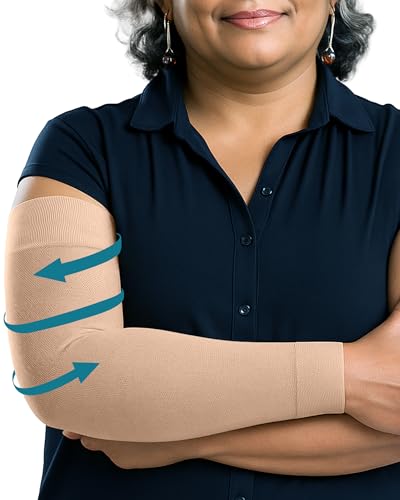
- Two sleeves included
- UPF 50+ breathable fabric
- Silicone grip needs skin checks
Best For: Mild compression with sun protection
Hand-to-Arm Coverage
Hiball 20–30 mmHg Sleeve with Gauntlet

- Covers palm through upper arm
- Single sleeve included
- Silicone anti-slip top band
Best For: Continuous hand-and-arm coverage
Soft Long-Fit Option
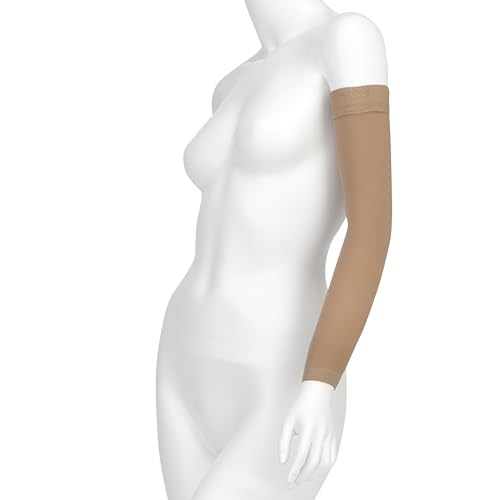
- 20–30 mmHg compression
- Soft, breathable microfiber
- One Max, Long sleeve
Best For: A soft-knit Max, Long fit
Patterned Multi-Pack
Toulite 20–30 mmHg Arm Sleeves

- Four sleeves in two pairs
- Floral pink-ribbon styling
- One-size fit needs checking
Best For: Rotating patterned sleeve pairs
Best Hand Coverage
beister 20-30 mmHg Arm Sleeve with Gauntlet
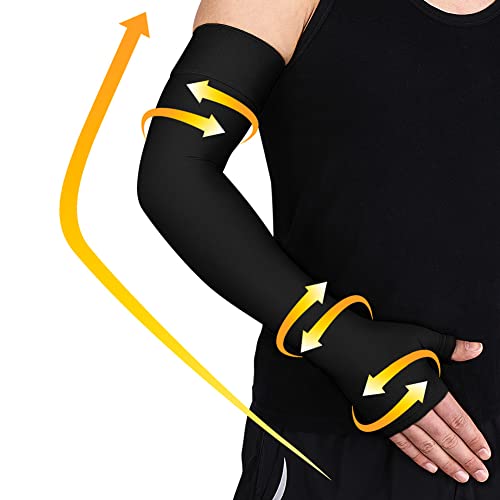
- Attached thumb-and-palm gauntlet
- Open fingers preserve grip
- Single sleeve; hand wash only
Best For: Arm and hand coverage with free fingers
Higher-Compression Pick

- 30-40 mmHg listed compression
- Silicone border
- Machine-washable; Max, Long fit
Best For: Clinician-recommended 30-40 mmHg compression
Full-Arm Coverage Pick

- Wrist-to-upper-arm coverage
- Dotted silicone top band
- Verify conflicting listing specifications
Best For: Long arm coverage with a silicone cuff
Post-Mastectomy Pick
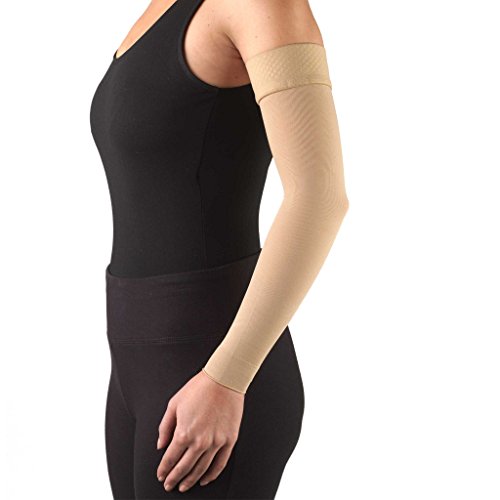
- Graduated 20–30 mmHg compression
- Latex-free nylon-spandex fabric
- Silicone dot grip band
Best For: Post-surgery arm swelling support
Lighter Compression Pick

- Graduated 15–20 mmHg compression
- Silicone stay-put band
- Breathable four-way-stretch knit
Best For: Lighter-pressure, full-arm support
Higher Compression Pick
Juzo Dynamic 30–40 mmHg Sleeve

- 30–40 mmHg compression
- Microdot silicone grip border
- Machine-washable and dryable
Best For: Clinician-directed higher-compression support
Mild-Compression Pair – KEMFORD 15–20 mmHg Arm Sleeves
For shoppers comparing compression sleeves for lymphedema, this KEMFORD pair offers a 15–20 mmHg option intended for mild swelling. The breathable nylon-spandex fabric, silicone grip band, and UPF 50+ protection make it a practical choice to consider for daytime wear.
Best For: Adults seeking two arm sleeves with mild compression and sun protection.
Pros:
- Includes two sleeves rather than one.
- UPF 50+ fabric provides sun protection.
- Soft, breathable, latex-free fabric is machine washable.
Cons:
- Requires a bicep measurement and size-chart check; sizing up may be more comfortable between sizes or with swelling.
- The silicone grip band may irritate sensitive skin and should be checked during extended wear.
This is the lower-pressure choice in this group. Confirm that 15–20 mmHg matches your prescribed compression needs before ordering, and monitor skin under the grip band.
Hand-to-Arm Coverage – Hiball 20–30 mmHg Sleeve with Gauntlet
Among compression sleeves for lymphedema, the Hiball stands out for its attached gauntlet: one sleeve covers the palm, wrist, forearm, elbow, and upper arm. It provides 20–30 mmHg compression and has a dotted silicone band at the top to help limit slipping.
Best For: Shoppers who need continuous hand-and-arm coverage in a single garment.
Pros:
- Attached gauntlet extends coverage over the palm and wrist.
- 20–30 mmHg compression is specified.
- Silicone top band is designed to resist slipping.
Cons:
- Only one sleeve is included.
- The silicone band may irritate skin; check that the top edge does not constrict your arm.
Choose this style if coverage through the hand matters more than getting a pair. Check the size chart and confirm the compression level and gauntlet fit suit your care plan.
Soft Long-Fit Option – Juzo Soft 2001 Max Arm Sleeve
The Juzo Soft 2001 is a 20–30 mmHg option for buyers comparing compression sleeves for lymphedema who prefer a microfiber, opaque knit. This Max, Long arm sleeve has a silicone border and is listed as machine washable.
Best For: Shoppers whose measurements call for a Max, Long arm sleeve and who want a soft knit.
Pros:
- Specified 20–30 mmHg compression.
- Ultra-soft, breathable microfiber design.
- Silicone border helps hold the sleeve in place.
Cons:
- Includes one sleeve, not a pair.
- No hand or gauntlet coverage is listed.
Its key distinction is the soft knit in a Max, Long configuration. Verify that this specific fit and compression level match your measurements and care instructions before buying.
Patterned Multi-Pack – Toulite 20–30 mmHg Arm Sleeves
The Toulite set offers four compression sleeves for lymphedema shoppers who want extras to rotate. Its two pairs come in different styles and colors, including a floral pink-ribbon design, and are listed at 20–30 mmHg.
Best For: Buyers who want multiple patterned arm sleeves for regular rotation.
Pros:
- Four sleeves provide two pairs for wearing and replacing.
- Floral breast-cancer-awareness design adds a distinct look.
- Lightweight, stretchy nylon-spandex fabric.
Cons:
- Listed as one size, with no separate fit options in the supplied details.
- No gauntlet or hand coverage is specified.
This is the variety-focused pick, but fit deserves particular attention: confirm that its one-size design works for your arm measurements and that 20–30 mmHg is appropriate for you.
Best Hand Coverage – beister 20-30 mmHg Arm Sleeve with Gauntlet
Among compression sleeves for lymphedema, this beister option stands out for its attached gauntlet: it covers the thumb and palm while leaving the fingers open for gripping and typing. The single sleeve provides 20-30 mmHg graduated compression from the hand toward the upper arm.
Best For: Shoppers who want arm compression plus thumb and palm coverage without covering their fingers.
Pros:
- Gauntlet extends support beyond the wrist.
- Silicone-dotted upper cuff helps keep the sleeve in place.
- Breathable nylon-spandex fabric is designed for extended wear.
Cons:
- Only one sleeve is included.
- Hand wash only.
The extra hand coverage is the reason to choose this model; check the size chart carefully, since a comfortable fit matters with 20-30 mmHg compression.
Higher-Compression Pick – Juzo Dynamic 3512 Arm Sleeve
If you’re comparing compression sleeves for lymphedema and need a higher listed pressure range, the Juzo Dynamic 3512 offers 30-40 mmHg compression. This beige, pull-on sleeve is listed in a Max, Long configuration and has a silicone border.
Best For: Buyers whose clinician has recommended 30-40 mmHg arm compression and who fit the listed Max, Long sizing.
Pros:
- 30-40 mmHg compression provides a higher-pressure option than the other sleeves here.
- Silicone border is designed to help the sleeve stay positioned.
- Machine-washable according to the care instructions.
Cons:
- Higher compression may not be appropriate without professional guidance.
- Max, Long sizing requires careful measurement before purchase.
Its main distinction is the higher compression range. Confirm both the prescribed pressure and Juzo sizing before choosing it over a 20-30 mmHg sleeve.
Full-Arm Coverage Pick – Hiball 20-30 mmHg Arm Sleeve
For shoppers considering compression sleeves for lymphedema, this Hiball sleeve offers 20-30 mmHg compression with an extra-long design that covers the wrist, forearm, elbow, and upper arm. Its dotted silicone top band is intended to reduce slipping.
Best For: Buyers seeking a single, long arm sleeve with wrist-to-upper-arm coverage and a stay-put cuff.
Pros:
- Extended design covers the wrist through upper arm.
- Dotted silicone band helps hold the upper cuff in place.
- Stretchy, breathable fabric is designed for daily activities.
Cons:
- Only one sleeve is included.
- The supplied description conflicts on fabric percentages and compression direction, so verify specifications before buying.
This is a straightforward long-coverage option, but those inconsistent listing details make sizing and specification checks especially worthwhile.
Post-Mastectomy Pick – Truform 20–30 mmHg Arm Sleeve
Among compression sleeves for lymphedema, this Truform option offers 20–30 mmHg graduated compression and is designed for post-mastectomy swelling management. Its latex-free nylon-spandex fabric and silicone dot top band address skin sensitivity and slippage.
Best For: People seeking a latex-free, 20–30 mmHg sleeve for post-surgery arm swelling.
Pros:
- Graduated 20–30 mmHg compression.
- Dot-grip band helps keep the sleeve in place.
- Wrist pressure relief accommodates pairing with a glove.
Cons:
- Requires measurements against the size chart.
- Needs gentle washing and flat air-drying.
This is a practical choice when its prescribed pressure range and measurements match your needs; confirm the fit before ordering.
Lighter Compression Pick – MGANG 15–20 mmHg Arm Sleeve
If you’re comparing compression sleeves for lymphedema at a lower pressure range, this MGANG sleeve provides 15–20 mmHg graduated compression from wrist to upper arm. The listed medium version has a silicone stay-put band and a breathable, four-way-stretch knit.
Best For: Shoppers seeking 15–20 mmHg compression and full-arm coverage in a soft, flexible sleeve.
Pros:
- Graduated 15–20 mmHg compression.
- Silicone band helps resist slipping.
- Moisture-wicking nylon-spandex fabric and sizes from S to XXL.
Cons:
- Requires wrist, elbow, bicep, and arm-length measurements for sizing.
- The listed variant has silicone contact at the top band.
Consider this one if the lighter pressure range suits your care plan, and check the size chart carefully for a comfortable fit.
Higher Compression Pick – Juzo Dynamic 30–40 mmHg Sleeve
For shoppers evaluating compression sleeves for lymphedema at a higher pressure range, the Juzo Dynamic provides 30–40 mmHg compression. It is intended for severe lymphedema or lipo-lymphedema management and uses a microdot silicone border to limit slipping and rolling.
Best For: People whose care plan calls for a properly fitted 30–40 mmHg arm sleeve.
Pros:
- 30–40 mmHg compression with a containment-focused knit.
- Microdot silicone border helps keep the sleeve in place.
- Machine-washable and dryable according to its care guidance.
Cons:
- Higher compression makes proper measurement and fitting especially important.
- Silicone border may not suit shoppers avoiding silicone contact.
This is the higher-compression option in the group; verify the required pressure and fit with your clinician before purchase.
How We Picked the Best Compression Sleeves for Lymphedema
We compared the listed pressure ranges, sleeve and gauntlet designs, length and size options, top-band features, and whether each listing is for one sleeve or a pair. The selection covers lighter-pressure options, several 20–30 mmHg choices, and higher-pressure Juzo Dynamic sleeves. Product listings cannot establish clinical effectiveness or guarantee fit, so use this comparison to narrow your choices—not to replace a lymphedema clinician’s advice.
Quick Comparison: Compression Sleeves for Lymphedema
15–20 mmHg: KEMFORD and MGANG are the lighter-pressure listings. 20–30 mmHg: Hiball, Juzo Soft, Toulite, beister, and Truform offer midrange pressure, with some listings including a gauntlet. 30–40 mmHg: the two Juzo Dynamic listings are higher-pressure options. Check the exact size and length before ordering: even sleeves with the same mmHg rating may fit differently.
Key Buying Factors for Compression Sleeves for Lymphedema
Start with the Prescribed Pressure
Do not choose a stronger sleeve simply because swelling feels worse. A clinician can recommend an appropriate compression range and advise whether an off-the-shelf sleeve is suitable. If you have new swelling, pain, numbness, or skin changes, seek medical advice rather than adjusting compression on your own.
Measure for Fit and Coverage
Follow each manufacturer’s measuring instructions, typically using arm circumferences and arm length. Measure at the time your care team recommends and compare the numbers with the specific product’s size chart. A sleeve that bunches, rolls, slips, or digs into the skin may not provide the intended support. Check whether a “long” or “max” version matches your measurements; those labels are not interchangeable across brands.
Decide Whether You Need Hand Coverage
A sleeve ends at the wrist, while a gauntlet extends over part of the hand. If your hand or fingers swell, ask your clinician what coverage you need; an attached gauntlet may be convenient, but it is not the right configuration for everyone. Also confirm whether the listing includes a single garment, a pair, or multiple pairs before comparing prices.
Check Grip and Daily Practicality
Silicone or dot-grip bands may help keep a sleeve in place, but they can bother sensitive skin. Consider how easily you can put the garment on, whether its fabric and seams feel comfortable, and what the care instructions require. Follow the manufacturer’s guidance for washing and replacement as the garment loses elasticity.
Who Should Buy Which Compression Sleeves for Lymphedema?
If you have been advised to use 15–20 mmHg, begin with the KEMFORD or MGANG listings and prioritize accurate sizing. For prescribed 20–30 mmHg compression, compare the Hiball, Juzo Soft, Toulite, beister, and Truform options by measurements, grip, and whether hand coverage is needed. If your clinician specifies 30–40 mmHg, look at the Juzo Dynamic listings, paying particular attention to size and length. When in doubt, confirm the pressure, fit, and coverage with your lymphedema care team before buying.